Loading...
Loading...
Loading...
Loading...

CURT

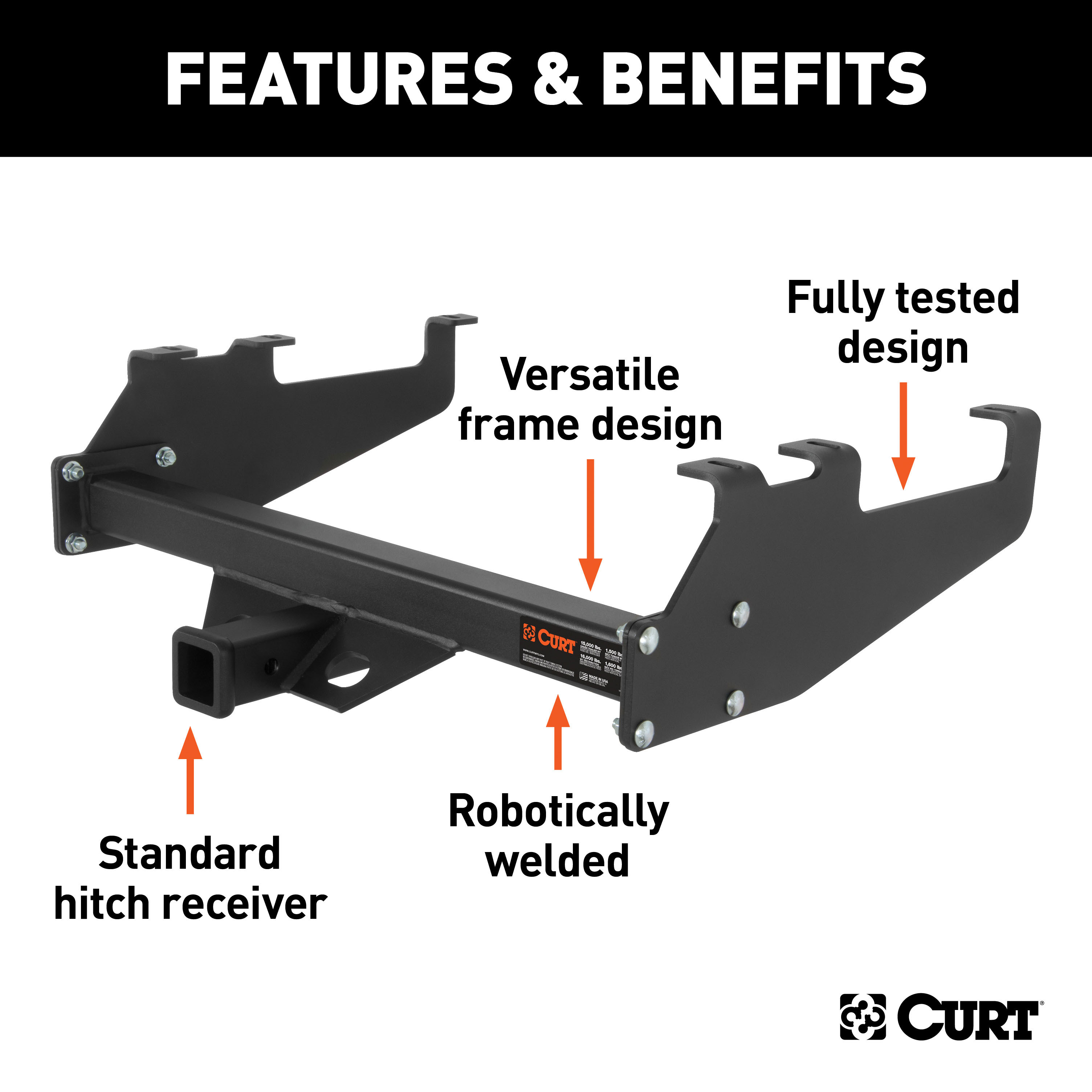
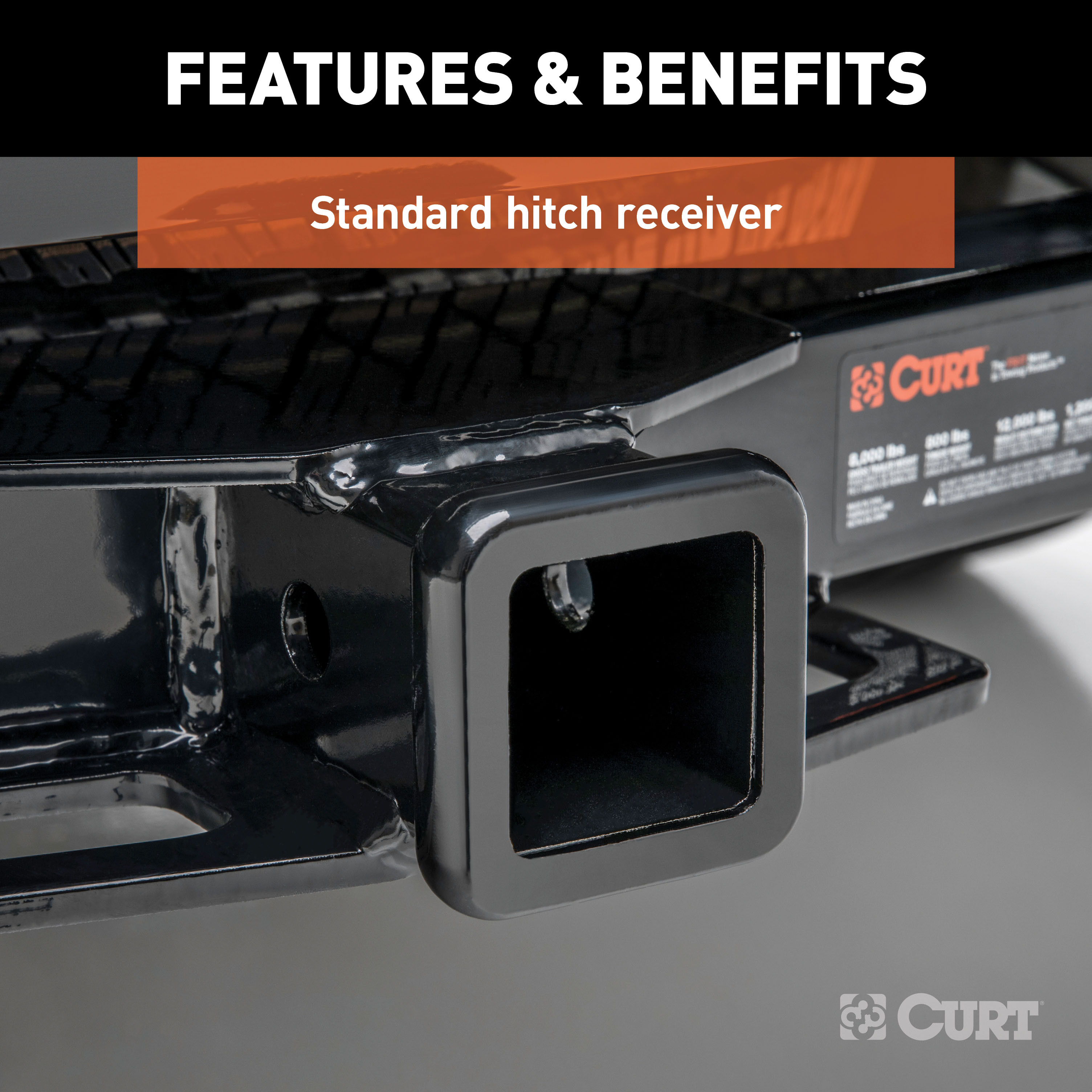
See instruction sheet for a full application list
Trailer hitch weight ratings are limited to vehicle manufacturer's stated capacities
Includes strong, grade-8 installation hardware

Includes strong, grade-8 installation hardware


Warranty: Limited Lifetime Warranty (One-Year Finish, One-Year Parts)
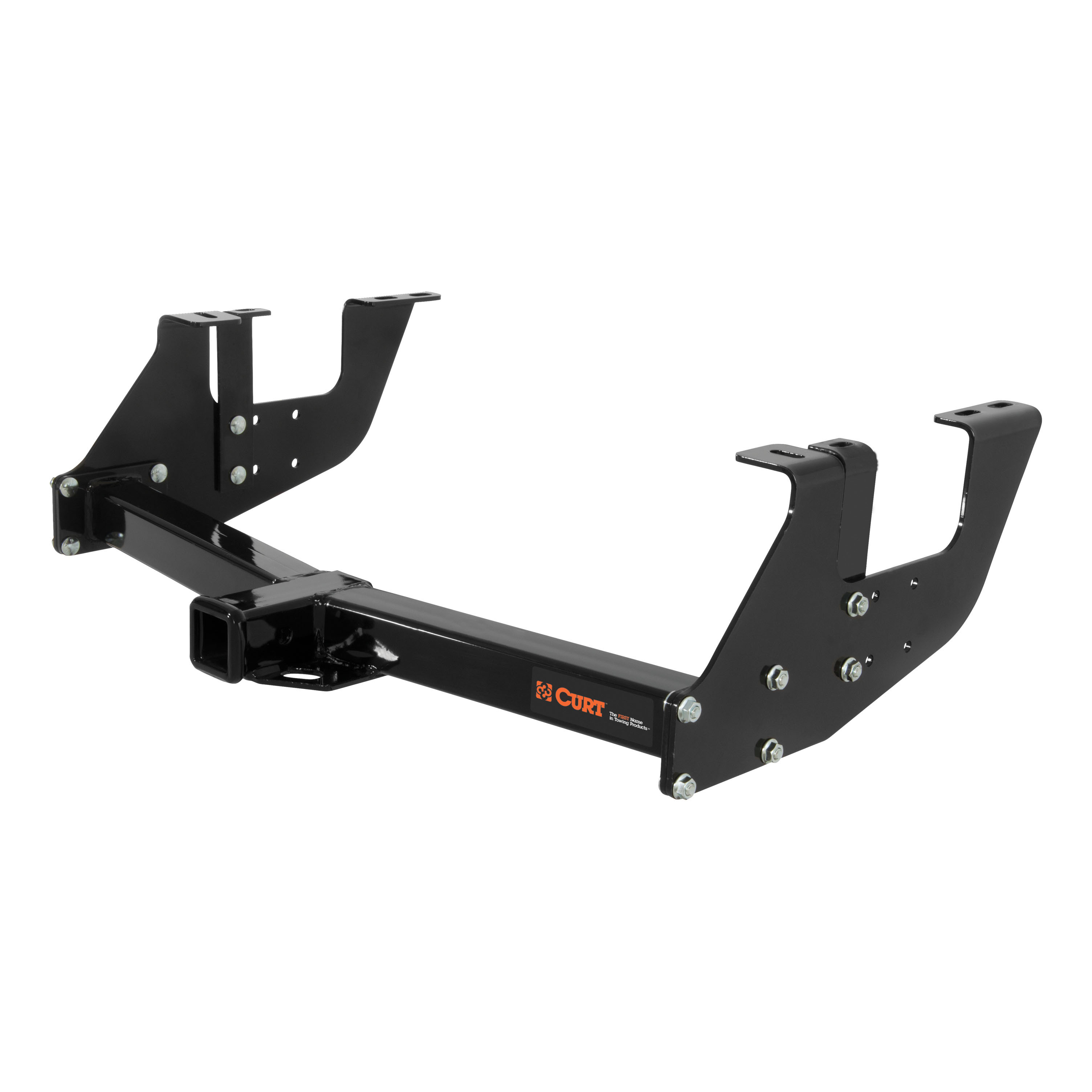
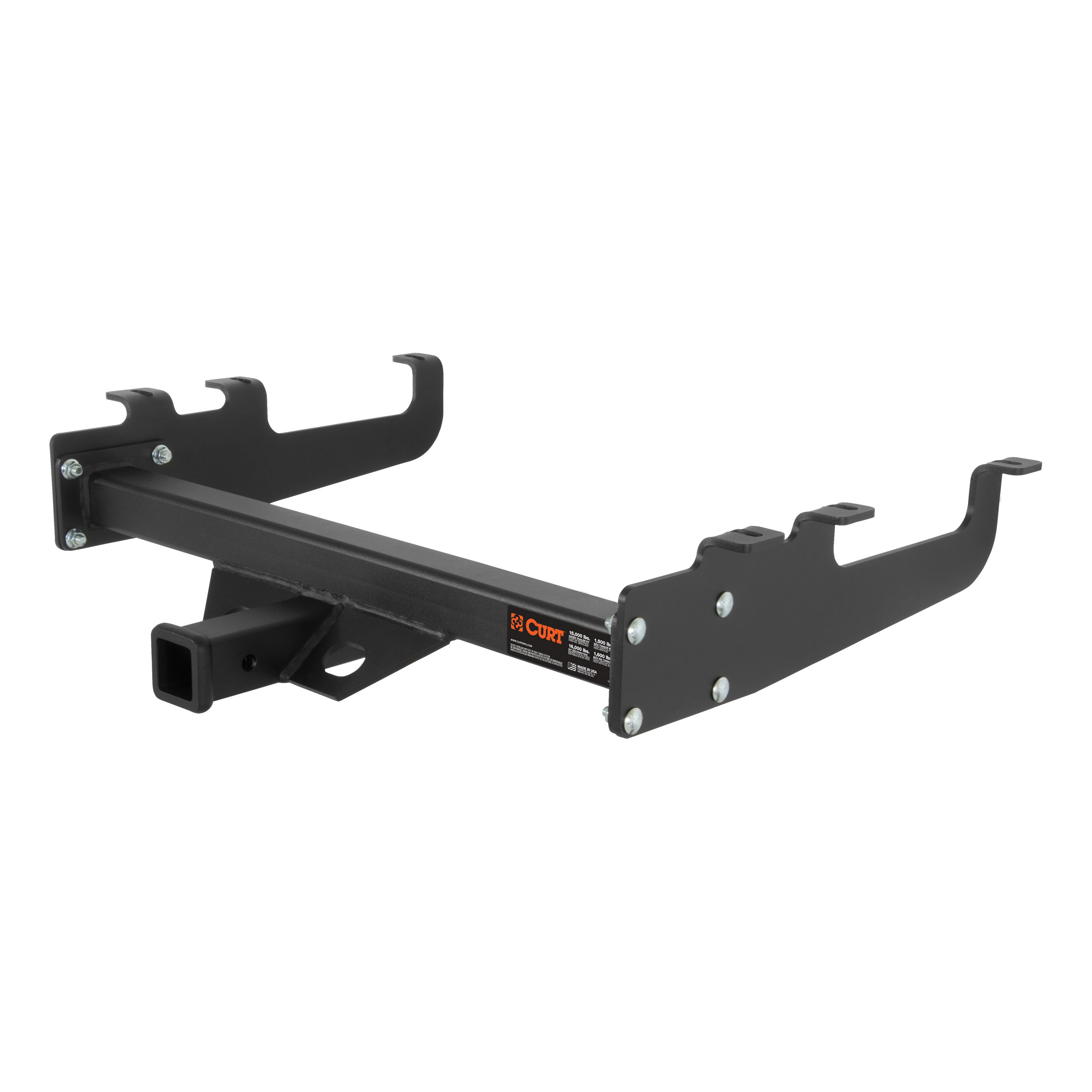
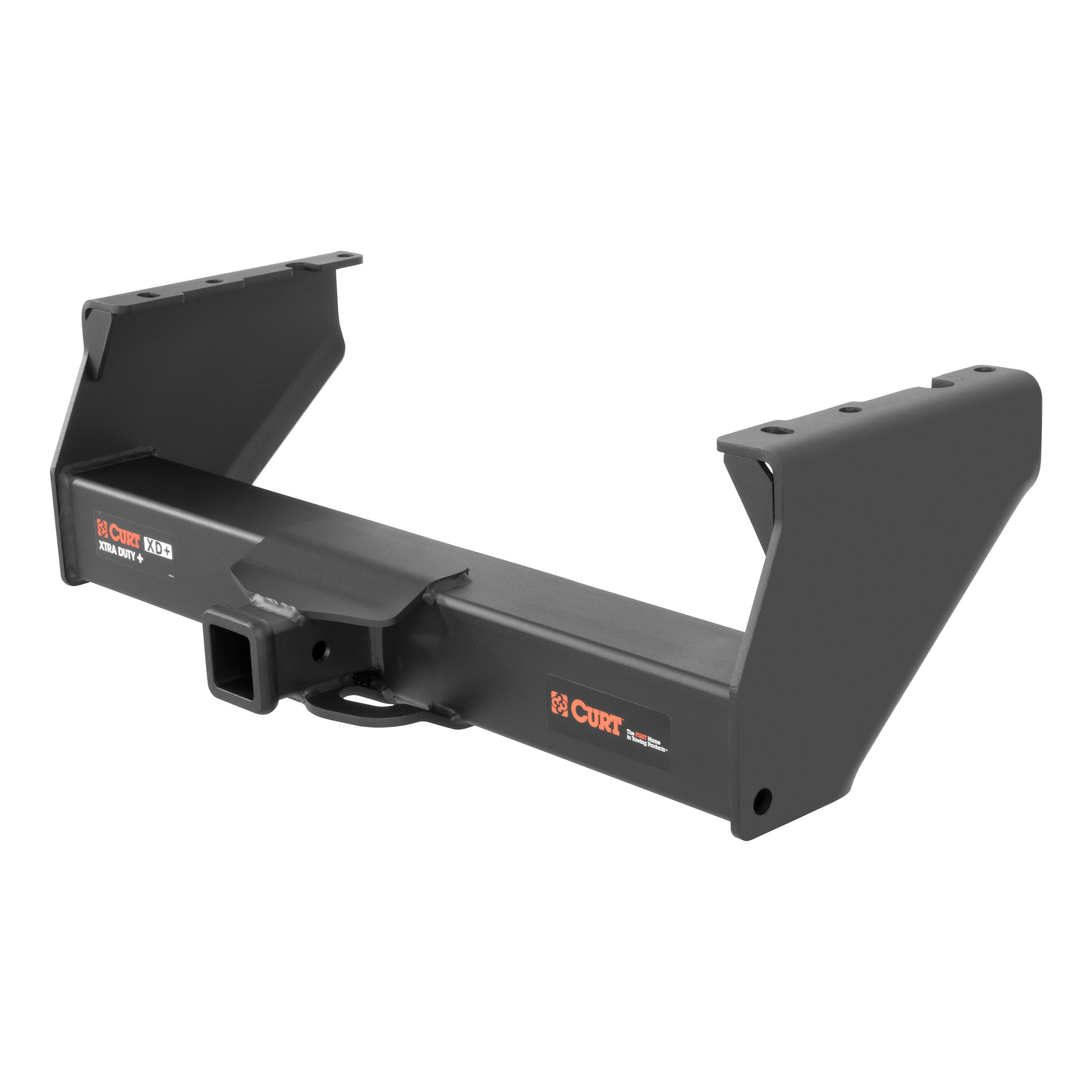
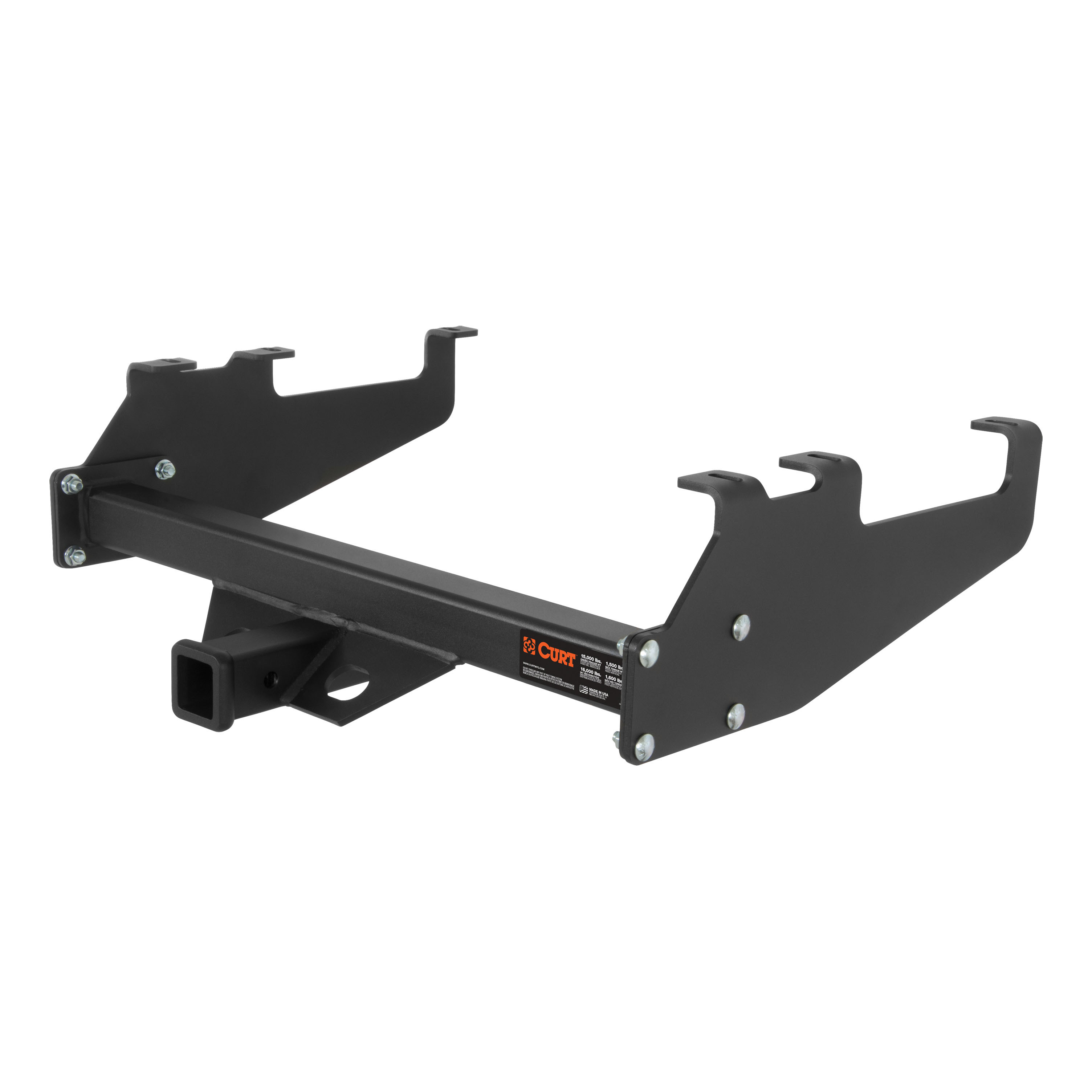
Main Body Shape: Square
Receiver Tube Size (Inches): 2 IN
Finish: CARBIDE BLACK POWDER COAT
WC / TW (Pounds): 1,500 LB / 15,000 LB
WD / WDTW (Pounds): 16,000 LB / 1,600 LB
Weight Carrying Capacity (Pounds): 15,000 LB
WC Tongue Weight (Pounds): 1,500 LB
Weight Distribution (Pounds): 16,000 LB
WD Tongue Weight (Pounds): 1,600 LB
Gross Trailer Weight (Pounds): 15,000 LB
Installation Time Exact (Minutes): 0
When a custom hitch is not available for your vehicle, CURT offers the multi-fit hitch. Designed to be the ultimate in versatility, CURT universal trailer hitches fit several different vehicle manufacturers, including Chevy, GMC, Dodge, Ford and more. The multi-fit hitch is a universally designed alternative to our custom hitches. It provides a more affordable option and flexibility in installation. Very simply, a CURT multi-fit trailer hitch uses a sliding or adjustable frame to match the width of your vehicle's frame. In general, multi-fit hitches are used on mid-size and full-size pickup trucks and class 5 multi-fit trailer hitch features a gross trailer weight capacity of 15,000 lbs., a tongue weight capacity of 1,500 lbs. and a 2" x 2" receiver tube opening, making it an excellent choice for towing toy haulers, dump trailers, logging trailers, gravity boxes, small yacht trailers, as well as cargo carriers, bike racks and winch mounts. For a little extra towing power and stability, this multi-fit hitch can also be used in combination with a weight distribution system, bringing its gross trailer weight capacity up to 16,000 lbs. and its tongue weight capacity up to 1,600 lbs. (NOTE: Never exceed the lowest weight capacity of any towing component).

CURT offers a variety of high-quality trailer hitches and accessories for select vehicle models. Find the perfect fit for your towing needs at TowUniverse.
CURT, a Lippert brand, offers a complete line of towing products and is the leading manufacturer of custom-fit trailer hitches. We offer the broadest selection of custom-fit hitches, and each one is designed, welded, and coated in Wisconsin.
CURT is also a leader in flat towing products, as well as 5th wheel, gooseneck, and weight distribution hitches, ball mounts, electrical components, cargo solutions, and other towing accessories.
For everything from passenger cars and vans to full-size pickups and SUVs, CURT is 'The First Name in Towing Products®.'
Limited Lifetime Warranty (One-Year Finish, One-Year Parts)
Yes, Curt part number 15511 is designed for 1999-2007 Ford F-450 cab and chassis vehicles.
Curt part number 15511 fits 1962-1987 Chevy/GMC F/S pickups, except short bed models. Your vehicle must have a 10" step bumper.
Yes, Curt part number 15511 fits 1988-current Chevy/GMC cab and chassis vehicles. Your vehicle must have a 10" step bumper and a 34" frame width.
Curt part number 15511 fits 1967-1998 Ford full-size pickups with 10" step bumpers and old body style only. It is not compatible with newer body styles.
Yes, Curt part number 15511 fits 1972-1995 Dodge full-size trucks with a 10" step bumper.
Spare tire relocation is required for 1962-1987 Chevy/GMC pickups and 1988-current Chevy/GMC cab and chassis vehicles. The spare tire "L" bracket (CM-SP141) must be positioned approximately 6" forward from its previous location. For 1999-2007 Ford F-450, 1967-1998 Ford pickups, and 1972-1995 Dodge trucks, spare tire removal may be temporary during installation but relocation is not required.
For 1972-1995 Dodge trucks, the rear exhaust hanger bracket must be removed before installation (1994-1995 models) or the spare tire and hanger bolt must be removed (1972-1993 models). The exhaust hanger bracket is reinstalled after the hitch is secured. For other applications, the manual does not indicate exhaust interference.
For 1962-1987 Chevy/GMC and 1988-current Chevy/GMC vehicles, the bumper reinforcement brackets must be removed and discarded because the bumper will no longer be used for towing. The step bumper itself remains in place. For other applications, the manual does not specify bumper removal.
The hitch includes six 1/2"-13 UNC carriage bolts (10-10272), six .250 x 1.50 x 2.00" square hole spacers (CM-SP1), seven 1/2"-13 UNC serrated flange nuts (20-00062), eight 7/16"-14 UNC carriage bolts (10-10281), and eight 7/16"-14 UNC serrated flange nuts (20-00103). Additional hardware varies by application: Chevy/GMC applications include two .250 x 1.50 x 3.00" square hole spacers (CM-SP4), one 1/2"-13 UNC hex cap screw (10-10334), and one spare tire "L" bracket (CM-SP141). Ford and Dodge applications may include CM-SP4 spacers depending on frame width and model year.
The manual specifies a 17/32" drill bit for drilling frame holes (required for most applications). Locking pliers or C-clamps are needed to hold the hitch in position during drilling. A torque wrench is required to tighten fasteners to specification. The manual does not specify other tools such as socket sets, wrenches, or lifting equipment.
Drilling is required for 1999-2007 Ford F-450, 1967-1998 Ford pickups, and 1972-1995 Dodge trucks. Drilling is not required for 1962-1987 Chevy/GMC pickups or 1988-current Chevy/GMC cab and chassis vehicles, which use existing frame holes. All drilling uses a 17/32" drill bit.
Temporary spare tire removal is required for 1962-1987 Chevy/GMC pickups and 1988-current Chevy/GMC cab and chassis vehicles to allow hitch positioning. For 1972-1995 Dodge trucks (1972-1993 models), the spare tire and hanger bolt must be removed. For 1994-1995 Dodge trucks, the rear exhaust hanger bracket is removed instead. For 1999-2007 Ford F-450 and 1967-1998 Ford pickups, the manual does not mention spare tire removal.
1. Bolt the center section to side plates A and B using 7/16" carriage bolts and hex flange nuts. 2. Raise the hitch into position with the back edge of the side plate against the forward rivet. Hold in place with locking pliers or C-clamps and mark the six hole locations. 3. Remove the hitch and drill six 17/32" holes. 4. Place a CM-SP1 spacer on each 1/2" bolt and install in the holes. Raise the hitch into position and secure with 1/2" hex flange nuts. 5. Torque all 1/2" hardware to 110 ft-lbs and all 7/16" hardware to 59 ft-lbs.
1. Temporarily remove the spare tire. 2. Remove and discard the bumper reinforcement brackets. 3. Bolt the center section to side plates A and B using 7/16" carriage bolts and hex flange nuts. 4. Place a CM-SP1 spacer and 1/2" bolt into each forward-most hole in the frame rails. 5. Raise the hitch into position and secure loosely with a 1/2" hex flange nut. 6. Install a CM-SP1 spacer and 1/2" carriage bolt into each center bolt location and secure using a CM-SP4 spacer and 1/2" hex flange nut. 7. Install a CM-SP1 spacer and 1/2" carriage bolt into the rearmost bolt location and secure with 1/2" hex flange nuts. 8. Torque all 1/2" hardware to 110 ft-lbs and all 7/16" hardware to 70 ft-lbs. 9. Position the spare tire "L" bracket approximately 6" forward from the previous location and install the spare tire carrier bolt. 10. Replace the spare tire and tighten securely.
1. Bolt the center section to side plates A and B using 7/16" carriage bolts and hex flange nuts. Mount end plates as shown for 37.5" frames; face flange inward for 34" frames. 2. Loosen the spare tire bracket to allow room to position the hitch. Align the hitch so the frame rivet is just forward of the rearmost flange of the plate. Use locking pliers or C-clamps to keep the hitch in position. 3. Using a 17/32" drill bit, drill the frame through the six slots in the side plates. Drill holes as far to the outboard side of the frame rail as possible. 4. Slide CM-SP4 spacers between the frame and flange and secure the hitch with six 1/2"-13 carriage bolts and CM-SP1 spacers. 5. Torque all 1/2" hardware to 110 ft-lbs and all 7/16" hardware to 70 ft-lbs. 6. Retighten the spare tire bracket.
1. For 1972-1993 models, remove the spare tire and hanger bolt. For 1994-1995 models, remove the rear exhaust hanger bracket. 2. Bolt the center section to side plates A and B using 7/16" carriage bolts and hex flange nuts with flanges facing outward. 3. Locate the hitch under the vehicle with the slot in the rear flange of the side plate aligned with the center of the large hole in the vehicle frame. Place a CM-SP1 spacer inside the frame channel and secure with a 1/2" carriage bolt and flange nut. 4. For 1972-1993 models, drill the vehicle frame through slotted holes on the forwardmost flanges of the side plates using a 17/32" drill bit. Drill all four holes as far to the outboard side as possible. For 1994-1995 models, drill through slotted holes on both sides of the vehicle and install a 1/2"-13 carriage bolt and CM-SP1 spacer into each hole, securing with a hex flange nut. 5. For 1972-1993 models, add remaining fasteners. 6. Torque all 1/2" hardware to 110 ft-lbs and all 7/16" hardware to 70 ft-lbs. 7. For 1994-1995 models, reinstall the exhaust hanger bracket.
A 17/32" drill bit is required for all applications that require drilling. Drilling is required for 1999-2007 Ford F-450, 1967-1998 Ford pickups, and 1972-1995 Dodge trucks.
The number of holes varies by application. For 1999-2007 Ford F-450, six 17/32" holes must be drilled. For 1967-1998 Ford pickups, six holes must be drilled through the slotted holes in the side plates. For 1972-1995 Dodge trucks, four holes must be drilled for 1972-1993 models and four holes for 1994-1995 models.
Drill all holes as far to the outboard side of the frame rail as possible to ensure maximum strength. The holes are drilled through the six slots in the side plates. The frame rivet should be positioned just forward of the rearmost flange of the plate before drilling.
Torque specifications vary by application and fastener size. For 1999-2007 Ford F-450: torque all 1/2" hardware to 110 ft-lbs and all 7/16" hardware to 59 ft-lbs. For 1962-1987 Chevy/GMC pickups, 1988-current Chevy/GMC cab and chassis, 1967-1998 Ford pickups, and 1972-1995 Dodge trucks: torque all 1/2" hardware to 110 ft-lbs and all 7/16" hardware to 70 ft-lbs.
All 1/2" hardware on Curt part number 15511 should be torqued to 110 ft-lbs, regardless of application.
The torque specification for 7/16" hardware depends on the vehicle application. For 1999-2007 Ford F-450, torque to 59 ft-lbs. For 1962-1987 Chevy/GMC pickups, 1988-current Chevy/GMC cab and chassis, 1967-1998 Ford pickups, and 1972-1995 Dodge trucks, torque to 70 ft-lbs.
The manual does not provide specific towing capacity values. However, it states that you must not exceed your vehicle manufacturer's recommended towing capacity. The hitch can be used as either a weight-carrying hitch or a weight-distribution hitch, and capacity ratings vary by application. Consult your vehicle's owner manual or the manufacturer for your specific towing limits.
The manual does not provide specific tongue weight values. The hitch can be used as either a weight-carrying hitch or a weight-distribution hitch, and tongue weight capacity varies by application. Consult your vehicle's owner manual or the manufacturer for your specific tongue weight limits.
The manual does not provide the hitch weight. Contact Curt Manufacturing or consult the product specification sheet for this information.
After installation, periodically check the receiver hitch to ensure that all fasteners are tight and that all structural components are sound. The manual does not specify an initial inspection interval or post-installation testing procedure.
The manual states that you should periodically check the receiver hitch to ensure that all fasteners are tight and that all structural components are sound. It does not specify the exact interval for these checks.
Curt Manufacturing warrants this product to be free of defects in material and/or workmanship at the time of retail purchase by the original purchaser. If the product is found to be defective, Curt Manufacturing may repair or replace the product at their option when the product is returned, prepaid, with proof of purchase. Alteration to, misuse of, or improper installation of this product voids the warranty. Curt Manufacturing's liability is limited to repair or replacement of products found to be defective and specifically excludes liability for incidental or consequential loss or damage.
Curt 15511 fits 1999-2007 Ford F-450 cab and chassis; 1962-1987 Chevy/GMC F/S pickups (except short bed, with 10" step bumper); 1988-current Chevy/GMC cab and chassis (with 10" step bumper and 34" frame width); 1967-1998 Ford full-size pickups (with 10" step bumpers, old body style only); and 1972-1995 Dodge full-size trucks (with 10" step bumper).
Drilling is required for Ford F-450, Ford pickups, and Dodge trucks using a 17/32" drill bit. Drilling is not required for Chevy/GMC vehicles, which use existing frame holes.
Spare tire relocation is required for 1962-1987 and 1988-current Chevy/GMC vehicles. The spare tire "L" bracket must be positioned approximately 6" forward from its previous location. Temporary removal is required for installation on all models.
Torque all 1/2" hardware to 110 ft-lbs. For Ford F-450, torque 7/16" hardware to 59 ft-lbs. For all other applications, torque 7/16" hardware to 70 ft-lbs.
You need a 17/32" drill bit (for applications requiring drilling), locking pliers or C-clamps, and a torque wrench. The manual does not specify other tools.
The manual does not provide specific capacity values. Do not exceed your vehicle manufacturer's recommended towing capacity. Consult your vehicle's owner manual for limits.
Periodically check the hitch to ensure all fasteners are tight and all structural components are sound. The manual does not specify inspection intervals.
Total for 5 items: $644.00$489.53

Order by 2 PM ET, Monday–Friday, and it ships the same day.
CURT
No reviews have been added for this product.